


Primetime, the newest film by documentary turned narrative director Lance Oppenheim, is the newest A24 release that has divisive reactions. A24 is no stranger to making challenging films but the discourse on this film is unique. The film is based on Chris Hansen, the man behind the show How to Catch a Predator, a popular NBC hidden camera show where Hansen and his team would set up sting operations to catch child predators. The film chronicles Hansen’s psyche and if what Hansen is doing on the program is all out of good intentions or if it’s based around greed and self validification. The film itself shows us not only some of the more infamous sting operations but what was going on behind the scenes when the network understands they have a hit on their hand.
I’ve always gravitated to films about the how media can manipulate our own myopic lens of the world. Recently, the film Eddington tackles similar thematic materials about our relationship to media and what we perceive to be true and what is being manipulated as the norm on our television. There is a scene early on in this film where a TV executive is explaining to Hansen and his producer what shows they are competing with. He mentions the reality show The Biggest Loser, which I watched a documentary about last year that was a very damning look on how that show manipulated it’s audience to think it was okay to abuse your body if it meant loosing weight- because your appearance is what matters most and that is what makes us the most money, not your overall health. There is another scene where a cop goes to subway and starts ordering in the sandwich, there is a moment where the camera focuses on the background and we see a picture of the Jared the subway mascot on the wall, who infamously was arrested for possession of child pornography. The reason he was their mascot in the first place, consume our product and you too can be healthier. The seedier aspects to media and the human condition in general hides in plain site, and smiles at us as we go on with our days.

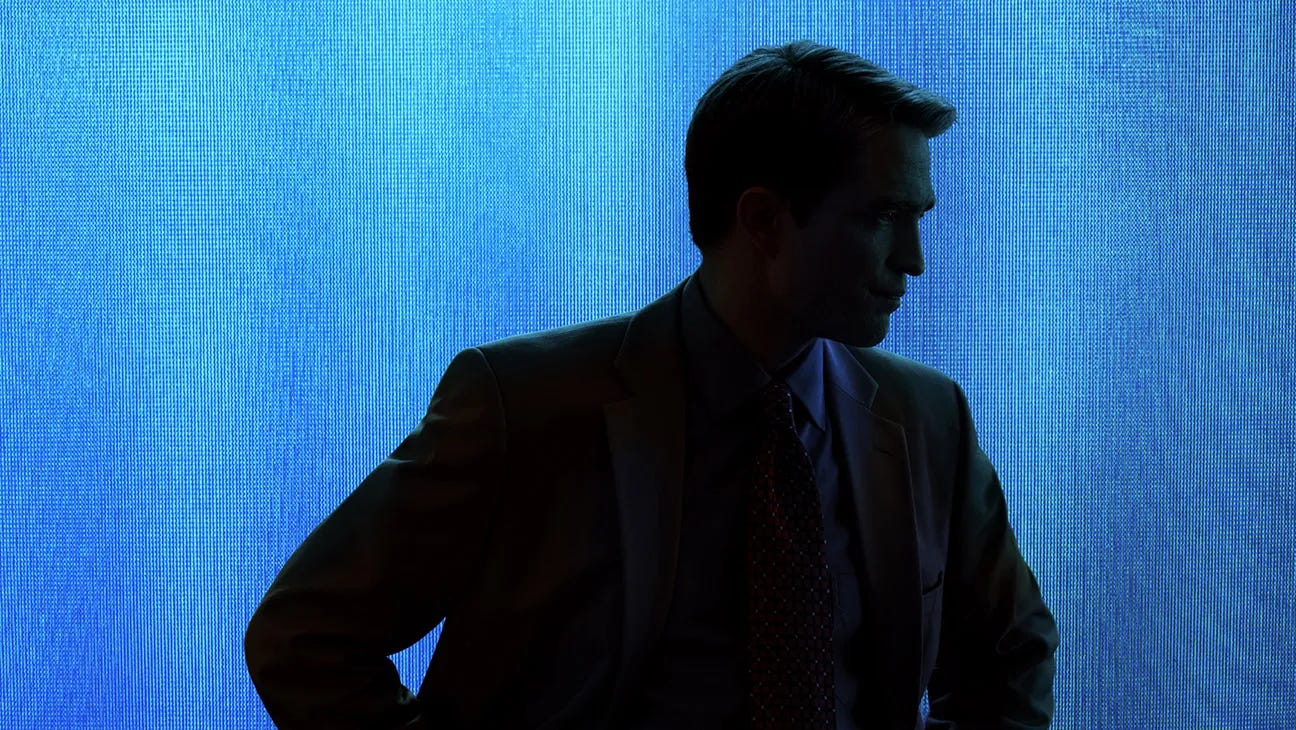
Primetime can not only be described as a thriller, but a full blown horror movie. This is something I believe unsuspecting movie viewers might be thrown off by, but something I found myself really engrossed in. The films biggest controversy comes from it’s portrayal of Chris Hansen. He’s played in the film excellently by Robert Pattison, who is channeling an early Nicholas Cage in his unhinged performance. Pattison always finds the humanity of Hansen, while being able to play the tortured part of himself effectively, to the point where you don’t know if you are laughing at his line delivery because it’s funny or uncomfortable- or both. Pattison gives the best performance of his career in the film and I believe this role cements him as one of our greatest living actors. However, this role is anything but conventional and because of that it has caused some controversy. Portraying Chris Hansen, a man who is still alive and active in media as a Travis Bickle or Patrick Bateman type is a daring choice that will leave several scratching their head, especially fans of Hansen.
In an interview during the pre show at The Alamo Drafthouse before the film starts director Lance Oppenheim describes why he decided to make this film and venture outside of his usual documentary filmmaking. He said he had a fascination with How to Catch a Predator and his sister bought him a cameo recording of Chris Hansen wishing him a happy birthday. Fascinated by this, he continued to look at other Hansen cameo videos and found one calling someone a ‘certified flex offender’ realizing that Hansen was making light of his job of catching child molester and was profiting off of it, playing into his memeabity in our current era.
The end credits of Primetime are clear that this film is ‘based on real events’ and parts of the film were interpreted for story purposes. This film is giving us a ‘what if’ that plays out on screen. What if Hansen was on the verge of a mental breakdown? What if these sting operations were just chosen by ‘what is going to get us the most views’ which was more important to the people involved than the actual victims these predators were harming? I also believe there is validity to this. The climax of this movie (without spoiling anything) is based on something that actually happened in real life. We also know that Hansen did have an affair on his wife while filming the show and we do know that the show continued to grow more and more successful the more and more Hansen became a media presence of his own outside of the show, a media personality on every television set in the United States. The thesis this film presents, while at times fictionalized, is based around concrete evidence. This movie isn’t as far fetched as several have claimed it to be. The cerebral elements of the film just add to the overall disorientation of going into the psyche of someone who is so consumed by their own success. In several ways, Chris Hansen is the precursor to someone like Mr. Beast on YouTube, who we have discovered did advocacy just to gain views, make money and become a millionaire. While Hansen and Mr. Beast have done good deeds in media, it’s all wrapped around a desire of being seen vs just wanting to do the right thing because it’s the right thing to do.
My favorite performance in the film is Skyler Gisondo, who plays Decoy Dan, one of the decoys who helps lure in the predators. He is the audience conduit of the film, Dan is an unassuming actor taking on a gig, not realizing the true societal pressures of putting himself in situations with the scariest people that exist on this planet. In one devastating and shocking sequence early on in the film involving a whipped cream can, we see Gisondo masterfully play the lost of innocence on screen just through his facial expressions alone. The story ends up being about his arc of discovering his own self worth through the show, trying to find his reason for being an artist. Does he have to be a good actor or develop his skills if what he is doing now as a decoy actually matters in bringing predators to justice? Is this more important than any role in Hollywood could bring him? These are questions that plague Dan for the entire film, helping root the film in something identifiable and real outside the delusions of Hansen himself.
There are very few times I watch a movie these days and think “how on Earth did they pull that off?” and I found myself thinking that in multiple scenes in Primetime. This biopic is the exact opposite of the film Michael that came out earlier this year, which was a film that presented us through Michael Jackson’s early life with the depth of a Wikipedia article. In Primetime, everything is dynamic and moving. Every shot composition, aspect ratio, color grading choice and music inclusion is inspired. There is not a single sequence in this movie that is’t trying something new. Oppenheim uses every tool at his disposal, coming from a documentary film background he’s able to give sequences a new visual language. I love the way archival footage is able to be inter spliced in sequences effortlessly. It’s jarring half hazard editing choices give the film a really exciting flair. It feels like visual language that is ten years ahead of the curve, all while trying to replicate a style from the past. The 4:3 aspect ratio and the fuzzy over saturated colors give the film a hazy nostalgic feel. They even use a 480p colonoscopy camera for some shots of this movie and it’s mesmerizing. I’ve never seen a movie like this and I think it’ll be one that inspires future generations of filmmakers to go outside the box and try something new.
If there’s one word to describe Primetime, it’s bold. It’s a bold new vision, it’s a bold new take and a divisive one at that. I believe this film will stand the test of time of one that perfectly articulates the moment we are in by presenting us a story from a television program from twenty years ago and how it’s story telegraphed the hellish media landscape we are in today. An excellent and challenging piece of filmmaking.